
Bagan Temple Guide: Where to Start in Myanmar’s Temple City
Lara Croft: Tomb Raider is a 2001 action-adventure film based on the Tomb Raider video game series featuring the character Lara Croft, portrayed by Angelina Jolie.
Before you go: Since the 2021 military coup, parts of Myanmar have seen armed conflict, and the March 2025 earthquake centred near Mandalay and Sagaing damaged many historic sites. Conditions change quickly, so check your government’s latest travel advisory and confirm with a local guide that the places you plan to visit are open and safe to reach before you go.
If the temple scenes in Lara Croft: Tomb Raider (2001) left you dreaming of ancient ruins, you may know they were filmed at Angkor in Cambodia. But Myanmar has a temple plain of its own that is every bit as spectacular.
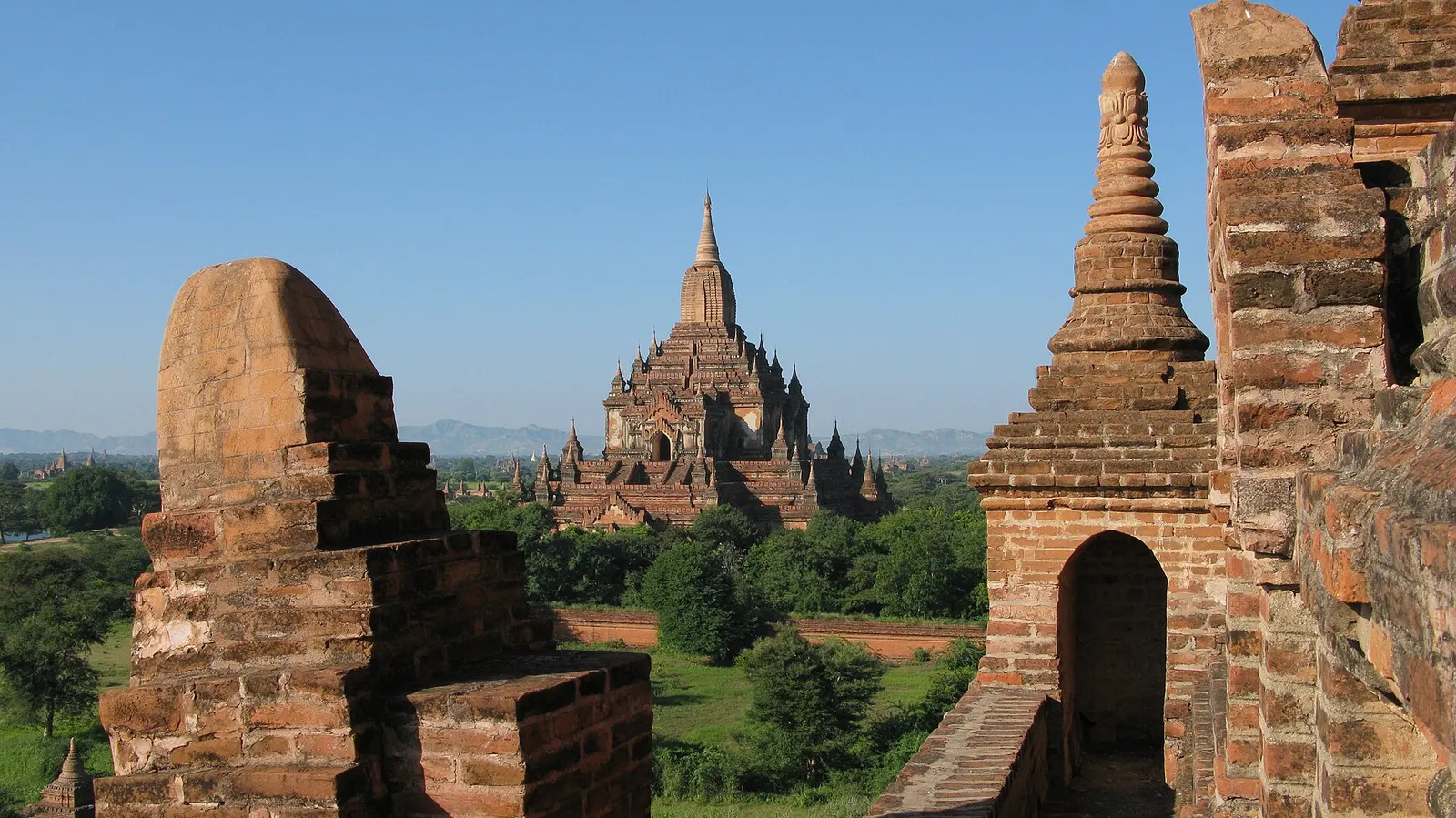
That place is Bagan, Myanmar’s temple city! The historical city has the largest and densest concentration of Buddhist sites and landmarks in the world – including more than 3,500 surviving stupas, temples, monasteries, and other structures (UNESCO counts 3,595), most dating back to the 11th to 13th centuries.
These are what remain of the 10,000-plus religious monuments built in its glory days. This temple town is one of Myanmar’s main attractions. Once the capital of a powerful ancient kingdom, the area known as Bagan (ပုဂံ) or, bureaucratically, as the ‘Bagan Archaeological Zone’ occupies an impressive 26-sq-mile area. The Ayeyarwady (Irrawaddy) River drifts past its northern and western sides.
Modern tourists regard the remaining temples of Bagan as the equal of the Angkor Archaeological Park in Cambodia; in 2019, Bagan pulled alongside its Cambodian rival with its belated recognition as a UNESCO World Heritage Site. UNESCO recognition or not, Bagan certainly belongs in any Myanmar itinerary worth mentioning, and indeed many travelers make sure to cover Bagan when exploring greater Southeast Asia. Make the most out of your Bagan visit by taking on one of the adventures listed here.
The thousands of temples that are spread across the plains of Bagan are the most impressive testament to the religious devotion of Myanmar’s people – and rulers – over the centuries. They combine to form one of the richest archaeological sites in Asia and provide views quite unlike anywhere else on earth.
Every one of these temples, stupas, and pagodas has its own unique story to tell, and the interiors of many can be freely explored. Note that climbing the temples is prohibited; use the designated viewing mounds instead. The most spectacular time to see the temples is when the sun dramatically rises and falls over the plain at dawn or dusk. The large earthquake that hit Bagan in 2016 caused significant damage to some of the temples, but ironically much of it was to more modern additions to ancient structures. The view of many is that the quake may actually encourage more sensitive development in Bagan. The March 2025 earthquake also shook Bagan, and reports on the damage there are still patchy, so ask a local guide which temples are open before you plan your route.
List of temples to visit if you have no idea where to start
Sein Nyet Pagoda
Those looking for a set of temples away from the crowds but still featuring the beauty and traditional motifs can go in search of the Sister Temples built in the 12th and 13th centuries. Sein Nyet Ama is the elder sister and is a temple featuring the typical square structure with four entrances. Sein Nyet Nyima is actually a spire; however both sisters show off delicate and ornate stucco work, featuring ogres clinging to garlands, and both real and mythical animals larking along with the structures. The Sein Nyet Nyima is widely considered to be among the finest stupas at Bagan.
Shwezigon Pagoda
Shwezigon was built in the 11th century as an important shrine in Bagan, a center of prayer and reflection for the new Theravada faith. The pagoda stands between the villages of Wetkyi-in and Nyaung U.
Sulamani Guphaya Temple
The Sulamani Guphaya built in the late 13th century is one of Bagan's premier temple attractions. The name itself means 'Crowning Jewel' or 'Small Ruby.' It was actually more than a temple, for the complex originally contained a large number of buildings, including a lecture and ordination hall, cells for the monks, and a library. The red brick temple is step pyramidal on a square base and is oriented to the east. There are two major levels with porches at each of the cardinal points and prominent eastward-facing doorways. Each of the ascending squares has pilasters in the form of stupas at the corners and a beautifully wrought sikhara, restored since the devastating earthquake of July 1975, crowns the entire complex. The first story corridors are lit well enough to give light to photographs of the frescoes.
Dhammayangyi Temple
Dhammayangyi Temple is the most massive structure in Bagan that has a similar architectural plan to Ananda Temple. It was built by King Narathu in the 12th century. He was also known as Kalagya Min, 'the king killed by Indians'. The temple is located about a kilometer to the southeast of the city walls in Minnanthu direction. According to the chronicles, Narathu seized the throne by murdering his father, King Alaungsithu, and his elder brother, and then built this temple. The remaining western shrine features two original images of Gautama and Maitreya, the historical and future Buddhas.
Gawdawpalin Temple
The Gawdawpalin temple was built in the 13th century. It is one of the largest and most imposing of the Bagan temples. The Gawdawpalin is a large eastward-facing two-story temple set on a low platform in the center of a walled enclosure with four gateways. Such a sublime style was never again attempted at Bagan. Unfortunately, Gawdawpalin was close to the epicenter of the 1975 earthquake; the tower was destroyed and its upper parts were heavily damaged. There were repairs done at different times after that. Almost half of the exterior stucco moldings are still in place.
Mahabodhi Temple
It is the only specimen of its structure among thousands of surviving monuments in Bagan. Built in the 13th century, this temple is a replica of the famous Mahabodhi temple in Bodhgaya, Bihar State in India. The temple is a two-story structure about 43 meters high. Mahabodhi is unique among Bagan structures because of its extensive exterior ornamentation. Its numerous niches enclose over 450 Buddha images not only on the tower but also on the corner stupas.
Shwegugyi Temple
Located just to the north of Thatbyinnyu, the Shwegugyi was built in the early 12th century. It is a large single-story temple set on a large and tall platform. There are three square receding upper terraces with corner spires or stupas at each corner on top of the central block. A bright interior is created with wide corridors and eleven open arched windows. The temple is also famous for its fine stucco and carved wooden doors in the interior.
Thatbyinnyu Temple
With a height of just over 60 meters, the Thatbyinnyu Pagoda is towering above the other monuments of Bagan, Myanmar. Thatbyinnyu takes its name from the Omniscience of the Buddha. After the single-story pagodas built during the early period like the Shwezigon pagoda, the Thatbyinnyu built in the 12th century is one of the first two-story structures built in Bagan. The great height of the temple and the vertical lines of the ornamental features - the plain pilasters, the flame-like arch pediments, the corner stupas - give a soaring effect to the Thatbyinnyu.
Cover photo: Vyacheslav Argenberg, CC BY 4.0, via Wikimedia Commons
Tour with a licensed local guide
See all tours →Comments
Be the first to leave a comment.
Leave a comment
Related posts
8 Most Magical Christmas Markets Waiting for You to Explore
Culture and traditions often hold special meaning for people because such events trigger memories and a sense of belonging within a certain society. One of Christmas’s most loved traditions is to shop at Christmas markets. It is the one place that is merrier than your own home decor. They are packed
Dec 11, 2021
Myanmar Snack Tour: 10 Snacks and Edible Souvenirs to Try
Yangon is a great place to start your crash course in all dishes Burmese. The largest and most ethnically diverse city in Myanmar with a population of nearly 6 million, Yangon brings together the flavours and culinary influences from all over the country. In a not-so-distant past, consumers sat down
Dec 29, 2020
Local Markets in Myanmar and the Art of Haggling
Traveling is a lot about experiencing how people who live in other countries live their life, what they do on a daily basis, what they eat, and where they go. And local markets are where everything local happens, as traditional markets are the windows into the lifestyle of the people.
Dec 20, 2020