
9 Unique Animals in Myanmar
Before you go: Since the 2021 military coup, parts of Myanmar have seen armed conflict, and the March 2025 earthquake centred near Mandalay and Sagaing damaged many historic sites. Conditions change quickly, so check your government’s latest travel advisory and confirm with a local guide that the places you plan to visit are open and safe to reach before you go.
Wildlife found in Myanmar is a mixture of species from North, South and Southeast Asia. There are nearly 300 known mammal species, around 300 reptiles and more than 1,000 bird species found throughout the country. Big cats such as tigers and leopards still survive in remote forests, but they are rare and very seldom seen; rhinoceroses are thought to have disappeared from the country. Myanmar’s forests and highlands are still home to wild elephants, gaur and other wild cattle, wild boars and various deer species. Myanmar also houses varying monkey species including gibbons.
There are two different types of forests found in Myanmar - monsoon forests and rainforests. Monsoon forests are dry for at least three months of the year and are made up of deciduous trees (trees or shrubs that lose their leaves seasonally). In contrast, rainforests are dominated by broadleaf evergreens and endure a rainy season that lasts around nine months. Forests along the beaches of Myanmar are made up of palm trees and other tree species that can withstand storms.
Myanmar has dozens of national parks and wildlife sanctuaries. One of the best known is Alaungdaw Kathapa National Park in Sagaing Region, covering about 1,600 square kilometers. This park is home to a large population of wild elephants as well as other rare species like the Clouded Leopard, jungle cats, the Himalayan Brown Bear and the Sun Bear among others.
Below are some of the most rare and unique mammal and bird species you can discover in Myanmar, and where they live. Many of them are found in the far south, in the forests and coasts of Tanintharyi Region.
The Dusky Langur
This little langur is also called Spectacled Leaf Monkey because of the white rings around his eyes. In Myanmar it lives in the tropical forests of the south, close to the Thai border, in groups of up to 20 animals, with mostly one dominant male and his harem and offspring.
At birth, these Old World monkeys have pink faces, and their bodies are covered with bright yellow or orange hair. Within their first six months of life, however, an amazing and colorful metamorphosis occurs: their hair color changes to shades of gray, brown, or black with paler fur on their underside, hind legs, and tail. A demurely spiked lighter-colored hairdo adorns the crown of their heads. Adults’ faces are gray, except for their pale-pinkish lips that are encircled by a white patch of hair.
The Dugong
These enormous vegetarians live in warm coastal waters from East Africa to Australia. In Myanmar, small and threatened populations remain in seagrass areas off the Rakhine coast and around the Myeik Archipelago. Dugongs are related to manatees and are similar in appearance and behavior— though the dugong's tail is fluked like a whale's. Both are related to the elephant, although the giant land animal is not at all similar in appearance or behavior. Dugongs graze on underwater grasses day and night, rooting for them with their bristled, sensitive snouts and chomping them with their rough lips. These mammals can stay underwater for six minutes before surfacing. They sometimes breathe by “standing” on their tail with their heads above water.
The Sunda Pangolin
Sunda pangolins are critically endangered; in Myanmar they live in the southern forests. Like their fellow pangolin species elsewhere in Asia and Africa, they are being poached to extinction for their meat and their scales, which are used in traditional Chinese medicine, though there's no evidence they are effective. All eight species of these shy, scaly creatures are said to be the most trafficked mammals in the world. Pangolins are mostly covered in thick scales of keratin—the substance human fingernails are made of—that protect their bodies from predators like leopards. If threatened, they roll into a ball, like armadillos do, hiding their vulnerable belly and other parts not covered by the tough scales. This defense mechanism makes it easy for humans to grab them.
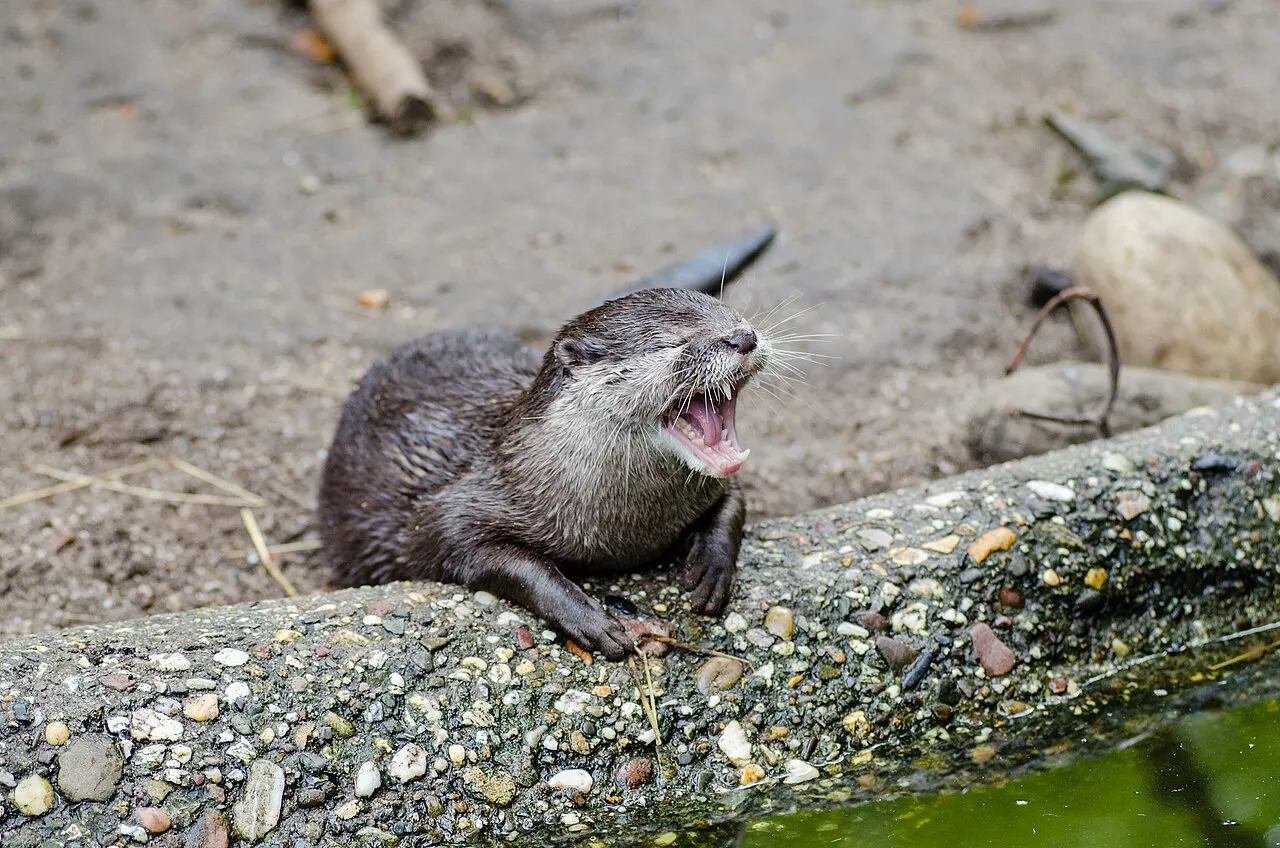
The Oriental Small-clawed Otter
The Oriental small-clawed otter lives from southern India to southern China and the Malay Peninsula; in Myanmar look for it along rivers, wetlands and mangrove coasts. They adapt to a range of aquatic habitats from freshwater rivers and creeks to tropical coastal wetlands, from mountain streams to rice paddies. These otters are the most social amongst the otter species and live in extended family groups numbering 12-20 individuals. They groom their fur continually to maintain the insulating qualities. They are excellent swimmers, swimming by moving their back legs and tail. After swimming or feeding, they tend to rub against logs and vegetation in the area in order to leave their scent, a form of 'scent marking'. They usually rest and sleep on land either in their dens or somewhere above ground, often sleeping in areas of moderate disturbance. Oriental small-clawed otters are carnivores (molluscivores), they eat frogs, crabs, shellfish and crayfish.
The Lesser Mouse-deer
The lesser mouse deer or chevrotain (Tragulus kanchil), found in the far south of Myanmar, is one of the smallest hoofed mammals in the world. Although it is a shy and secretive forest dwelling relative of the deer and rarely seen, it is very well known throughout Southeast Asia. Its species name kanchil recalls its Malay name 'Sang Kancil', a renowned trickster and folk hero. At first glance, the lesser mouse deer resembles a tiny, rabbit-sized deer that walks on its tiptoes. Lesser mouse deer have soft reddish-brown fur marked with a pattern of pale spots or stripes running along the sides of the neck and a pale-colored underside. Unlike deer, the males have no antlers, but do sport a pair of canine teeth that can be seen projecting downward from the upper jaw like two tiny tusks.
The Plain-pouched Hornbill
The plain-pouched hornbill (Rhyticeros subruficollis) is a species of hornbill in the family Bucerotidae. It is found in forests of the Dawna Range and the Tenasserim Hills of southern Myanmar, adjacent parts of western Thailand and northern Peninsular Malaysia. It is threatened by habitat loss.
Wallace's Hawk-eagle
Wallace's Hawk-eagle is one of the smallest eagles in the world. At about 46 cm long it is just the size of a falcon, with a small upright crest and black-barred underparts. In Myanmar it is found in the lowland forests of the south, and it is a rare feat to see this elegant bird. Wallace’s Hawk-Eagle is often seen in flight over or perched on a snag in lowland forests and forest edges.
The Crested Partridge
This small partridge is a resident breeder in lowland rainforests in south Burma, south Thailand, Malaysia, Sumatra and Borneo. Its nest is a ground scrape lined with leaves, which is concealed under a heap of leaf litter. Five or six white eggs are incubated for 18 days. The crested partridge is a rotund short-tailed bird, 25 cm (9.8 in) in length, with the male marginally larger than the female. Both sexes have a scarlet patch of bare skin around the eye and red legs without a spur or hind toe.
The Brown-winged Kingfisher
The brown-winged kingfisher (Pelargopsis amauroptera) is a species of bird in the subfamily Halcyoninae. It is found along the north and eastern coasts of the Bay of Bengal, occurring in the countries of Bangladesh, India, Malaysia, Myanmar and Thailand. Its natural habitat is subtropical or tropical mangrove forests.
Read more:Fisherman culture of Inkle lake
Cover photo: Mathias Appel, CC0, via Wikimedia Commons
Tour with a licensed local guide
See all tours →Comments
Be the first to leave a comment.
Leave a comment
Related posts

10 Reasons Why You Should Visit South Korea
One of the most exciting destinations to visit after the coronavirus pandemic is South Korea. This is a magical country that has kept its culture, traditions, and values alive throughout the years. Its distinct cuisine, modern entertainment, and signs of ancient civilizations place it among the best
Apr 13, 2021

Celebrating Lunar New Year in Taiwan: Traditions, Taboos and Etiquette You Need to Know
Chinese New Year is a main holiday in China and has strongly influenced lunar new year celebrations in East Asian countries, including Taiwan. If it is your first time in Taiwan during Chinese New Year, this "taboos and etiquette" guide on norms and customs would surely come in handy. It is always e
Jan 21, 2021

Traveling to Southeast Asia: Your Ultimate Southeast Asia Coffee Guide
From small mini stands, hip cafes to motorcyclist vendors, coffee in Southeast Asia is presented in different forms yet they remain the same with their sweet, creamy and sometimes bitter taste to let you start your day or wake you up in a lazy afternoon.
Jan 2, 2021