
Myanmar's biggest water fight, Thingyan Water Festival
Water festival is the most significant annual festival on the Myanmar calendar; it marks the start of the New Year, the beginning of the Myanmar lunar calendar, and celebrates life and rebirth. The correct Myanmar name for the water festival is Thingyan, however, outside Myanmar, it is often referred to as the water festival. Traveling around the world can lead you to engage in new, and often incredible, experiences.
Travel note: Since the 2021 military coup, parts of Myanmar have seen armed conflict, and the March 2025 earthquake centred near Mandalay and Sagaing damaged many temples and other sites. Before you go, check your government’s travel advisory and confirm with a local guide which areas and sites are currently open and safe to visit.
Water festival is the most significant annual festival on the Myanmar calendar; it marks the start of the New Year, the beginning of the Myanmar lunar calendar, and celebrates life and rebirth. The correct Myanmar name for the water festival is Thingyan, however, outside Myanmar, it is often referred to as the water festival. Traveling around the world can lead you to engage in new, and often incredible, experiences. Sometimes that just means taking part in a new culture, while at other times it means celebrating your own. One common thread throughout all societies is the importance of our life source: water. Whether it is to cool off after a hot day, bathe yourself in preparation for prayer, quench your thirst, or just to have fun, water plays a major role in some of the most significant experiences throughout history. Water festivals in Southeast Asia are used to end one year or season and begin the next one anew. Many of these festivals take place during the solar new year, with participants washing off the ill health, bad luck, and evil spirits from the old year in order to start the new year fresh. Other festivals are meant to bring people closer together or to celebrate other holidays. Each culture has its own traditions and beliefs, so each water festival is celebrated slightly differently. Whether you celebrate Songkran in Chiang Mai, Thailand, or Chaul Chnam Thmey in Phnom Penh, Cambodia, water festivals in SE Asia are great opportunities to splash strangers and get soaking wet.
As travelers are crowding in Thailand for their annual Songkran water festival, you can participate in somewhere with less of that crazy touristy crowd. Why not celebrate Thingyan in Myanmar? Thingyan is celebrated for three to five days, typically from April 13 to 16 in Myanmar. It is a New Year’s celebration that stems from the Buddhist tradition. New Year takes place mid-April according to the Burmese calendar. This is also the hottest time of year, with extreme heat and humidity. Though Thingyan takes place in mid-April just like Songkran, it is very different than the water festival in Thailand. Not only are you meant to get wet at this festival, but you’re also meant to take time to do good deeds for other people, and Buddhists undertake additional rules for festival days. Burmese belief says that water will wash away evils and bad luck from the past year, allowing you to start the new year fresh. The story behind Thingyan originated from the Buddhist version of a Hindu myth. The story goes that the King of Brahmas called Arsi lost a wager to the King of Devas, Sakra (or Thagya Min as he is known in Myanmar). On losing the wager Arsi was decapitated and the head of an elephant was put onto his body (transforming him into Ganesha). The Brahma was so powerful that if the head were thrown into the sea it would dry up immediately. If it were thrown up into the air the sky would burst into flames. Sakra, therefore, commanded that the Brahma’s head be carried by one princess Devi after another taking turns for a year each. The New Year henceforth marked the changing of the hands of Brahma’s head and is celebrated by the Thingyan festival.
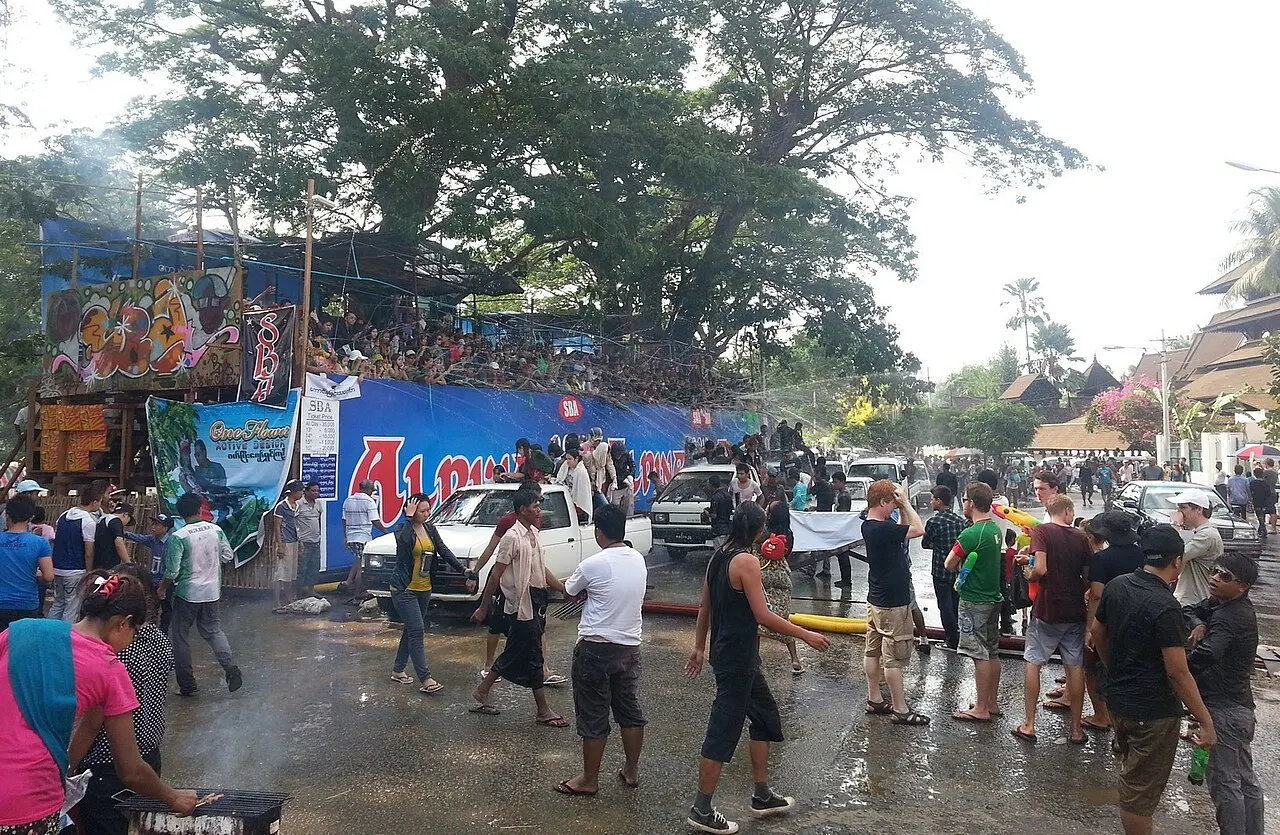
When night falls on Thingyan eve the fun begins in anticipation of the water festival. Festively named stages (mandat) made from bamboo, wood and beautifully decorated papier mache spring up overnight. Local women sing and dance in chorus lines uniformly dressed in traditional outfits. Most girls wear fragrant thanaka – a paste of the ground bark of Murraya paniculata which acts as both sunblock and astringent – on their faces and sweet-scented yellow padauk blossoms in their hair.
The first day of the Thingyan festival is meant for observing Buddhist rites. This includes a period of fasting. Offerings to images of Buddha, shrines, and monks are made. Buddhists must adhere to the Eight Precepts. When the fasting is over and a number of various religious duties are performed, a night of dancing and playing music gets underway. The next morning everyone gets their water guns, hoses, buckets, and anything else they can use to splash each other with water. A cannonball is fired, and the splashing begins. Orchestras, singers, puppeteers, comedians, and dance groups perform often during the water festival Thingyan. Food is generously handed out, and you could be given a cup of hot coffee, some fried noodles, or traditional snacks such as rice dumplings that have been made with palm sugar. In Mon State, a special dish is prepared from snakehead fish, beeswax, green mangoes, and onions. On New Year’s Day, the final day of Thingyan, people are less likely to be splashed when they venture outside. Many people are settling down to spend time visiting with family, preparing for the new year, and performing good deeds to start the year well. Young people wash the hair of their elders. Captive animals such as birds and fish, and sometimes livestock, are released, and special feasts are held for the monks.
Traditionally, the biggest Thingyan celebration is held in Yangon, with Mandalay holding the next biggest festival. Burmese New Year is one of the biggest holidays in Myanmar, so it would be hard to miss the Thingyan water festival no matter where you are. In the days leading up to Thingyan, giant platforms made of bamboo, called pandals, are built. They have rows of bright colors of hoses dangling from them. Many are sponsored by brands. These areas tend to be the focus of the Thingyan celebration, so if you want to be in the middle of all the action, look for these platforms.
Keep in mind that the scale of public celebrations now varies a lot from year to year. Since 2021 many people have stayed away from officially organised events, and in 2025, after the earthquake, Thingyan was observed quietly without the usual music and dance stages. In December 2024 Myanmar’s Thingyan was added to UNESCO’s list of Intangible Cultural Heritage. If you plan a trip around the festival, ask a local guide how it will be celebrated that year.
Starting from Thingyan Eve Buddhists are expected to observe the Eight Precepts including having only one meal before noon and hold uposatha observance days, which are similar to the Christian Sabbath. Alms are given to monks and offerings to Buddha images. An offering is typically a green coconut with its stalk intact encircled by bunches of green bananas (nga pyaw pwe oun pwe) and sprigs of thabyay or jambul (Syzygium cumini). Once the offering is given, scented water is poured over the Buddha image in a ceremonial washing from the head down. On a-kya nei Thagya Min makes his descent from the heavens to the earth. At a given signal, a cannon (Thingyan a-hmyauk) is fired and people come out with pots of water and sprigs of thabyay, then pour the water onto the ground with a prayer. A prophecy for the new year (Thingyan sa) will have been announced by the brahmins (ponna) and this is based on what the animal Thagya Min will be riding and what he might be carrying. Children are told that if they have been good Thagya Min will take their names down in a golden book but if they have been naughty their names will go into a dog book! Thingyan (a-hka dwin) is a favorite time for shinbyu novitiate ceremonies for boys – when they join the monks (Sangha) and spend a short time in a monastery. It is akin to coming of age ceremonies in other religions.
Cover photo: Go-Myanmar, CC BY-SA 3.0, via Wikimedia Commons
Comments
Be the first to leave a comment.
Leave a comment
Related posts
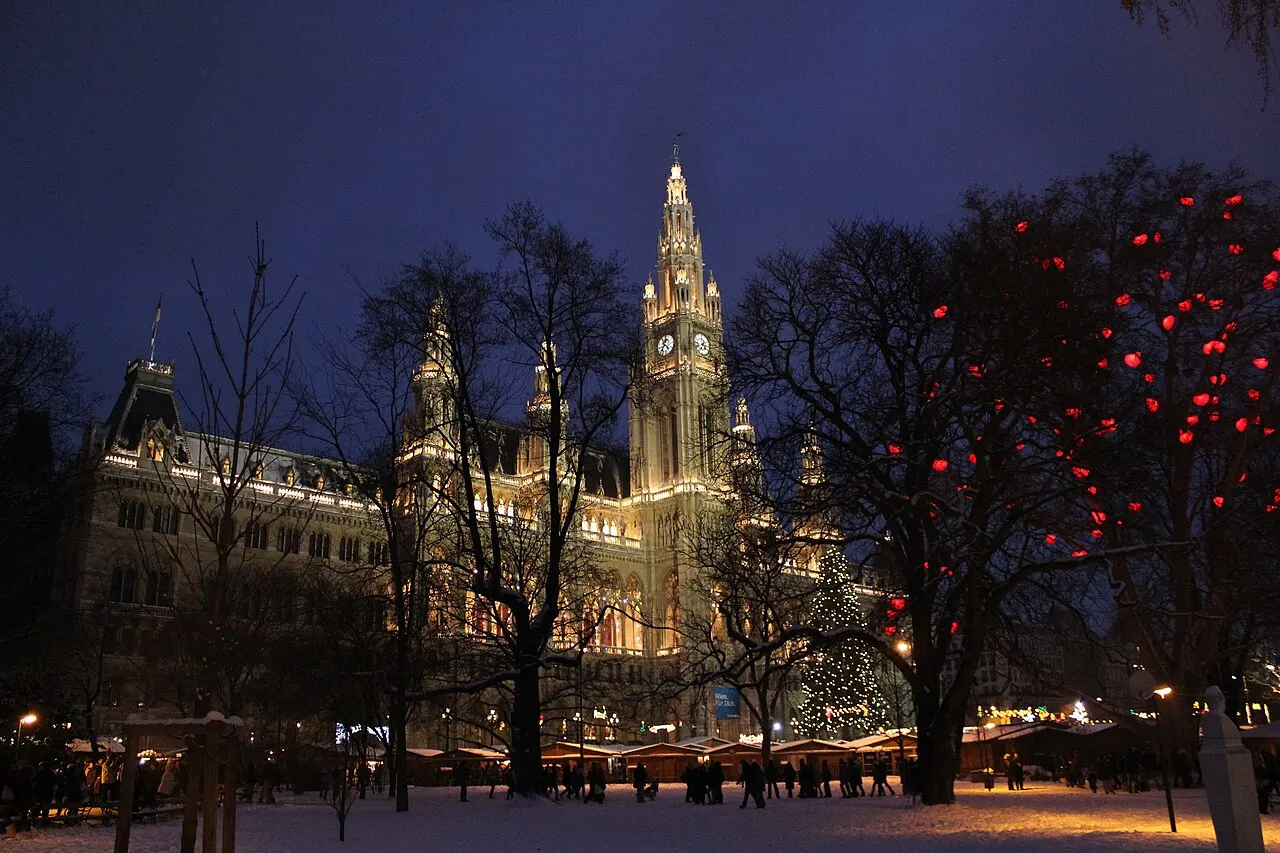
8 Most Magical Christmas Markets Waiting for You to Explore
Culture and traditions often hold special meaning for people because such events trigger memories and a sense of belonging within a certain society. One of Christmas’s most loved traditions is to shop at Christmas markets. It is the one place that is merrier than your own home decor. They are packed
Dec 11, 2021
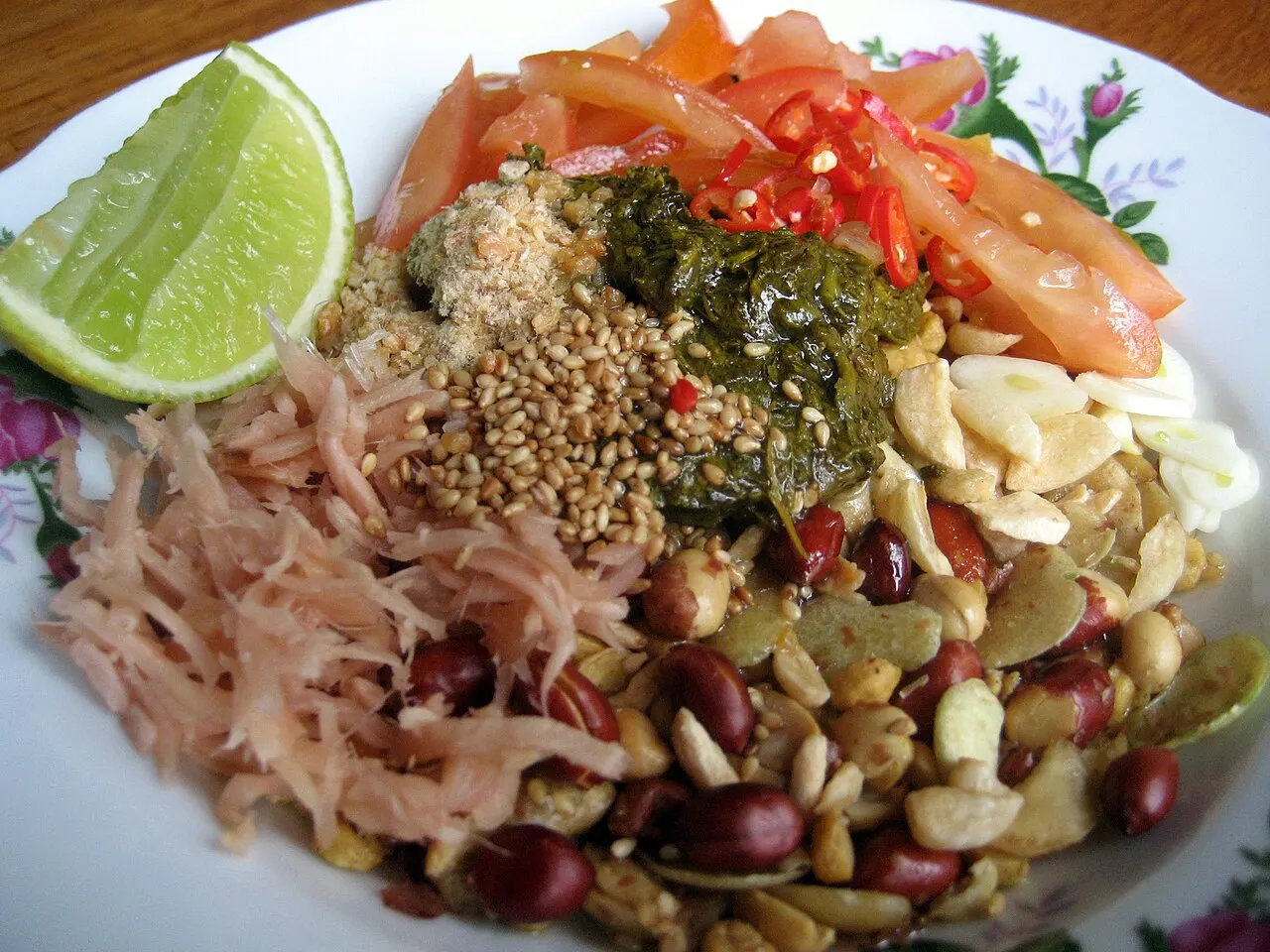
Myanmar Snack Tour: 10 Snacks and Edible Souvenirs to Try
Yangon is a great place to start your crash course in all dishes Burmese. The largest and most ethnically diverse city in Myanmar with a population of nearly 6 million, Yangon brings together the flavours and culinary influences from all over the country. In a not-so-distant past, consumers sat down
Dec 29, 2020
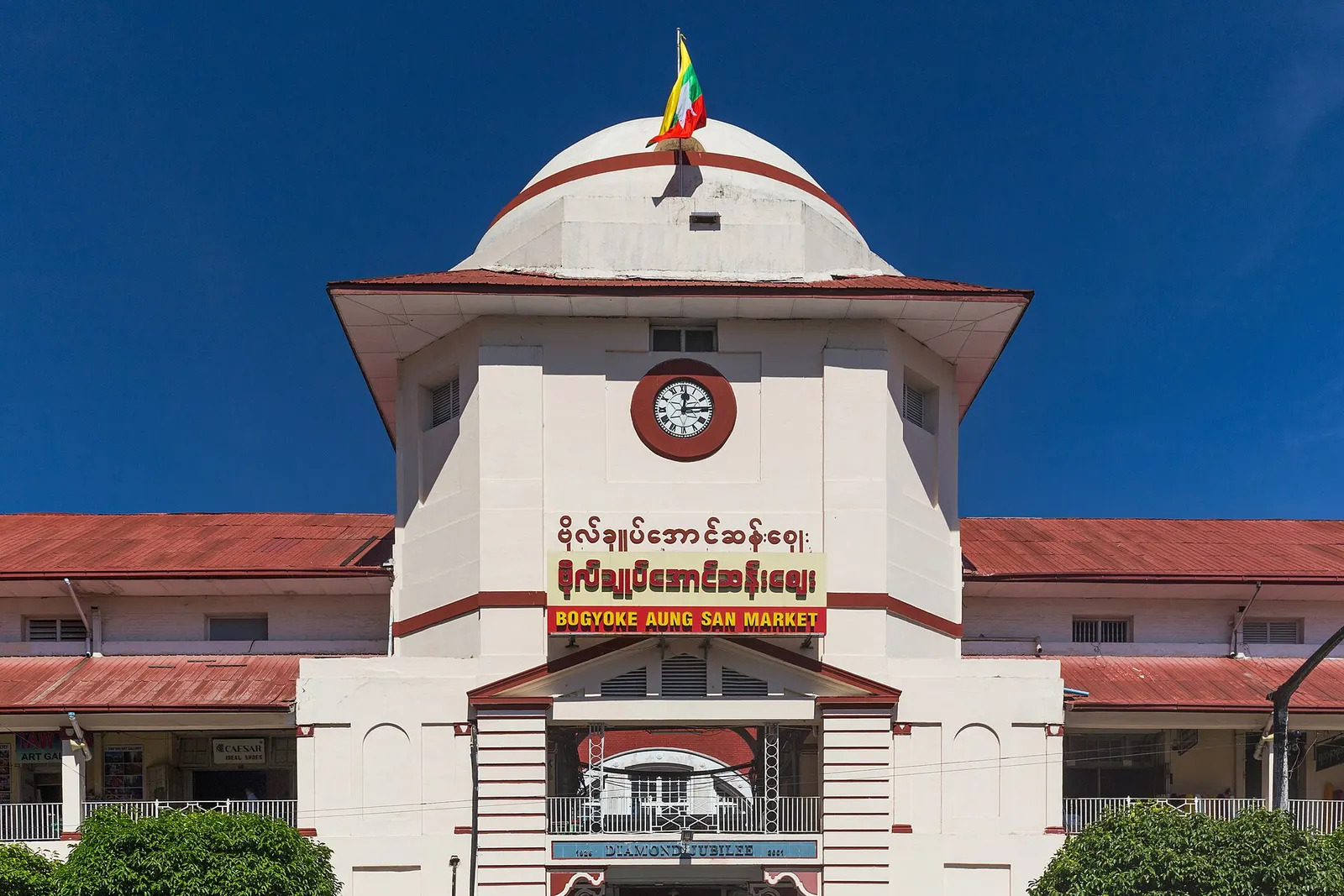
Local Markets in Myanmar and the Art of Haggling
Traveling is a lot about experiencing how people who live in other countries live their life, what they do on a daily basis, what they eat, and where they go. And local markets are where everything local happens, as traditional markets are the windows into the lifestyle of the people.
Dec 20, 2020